
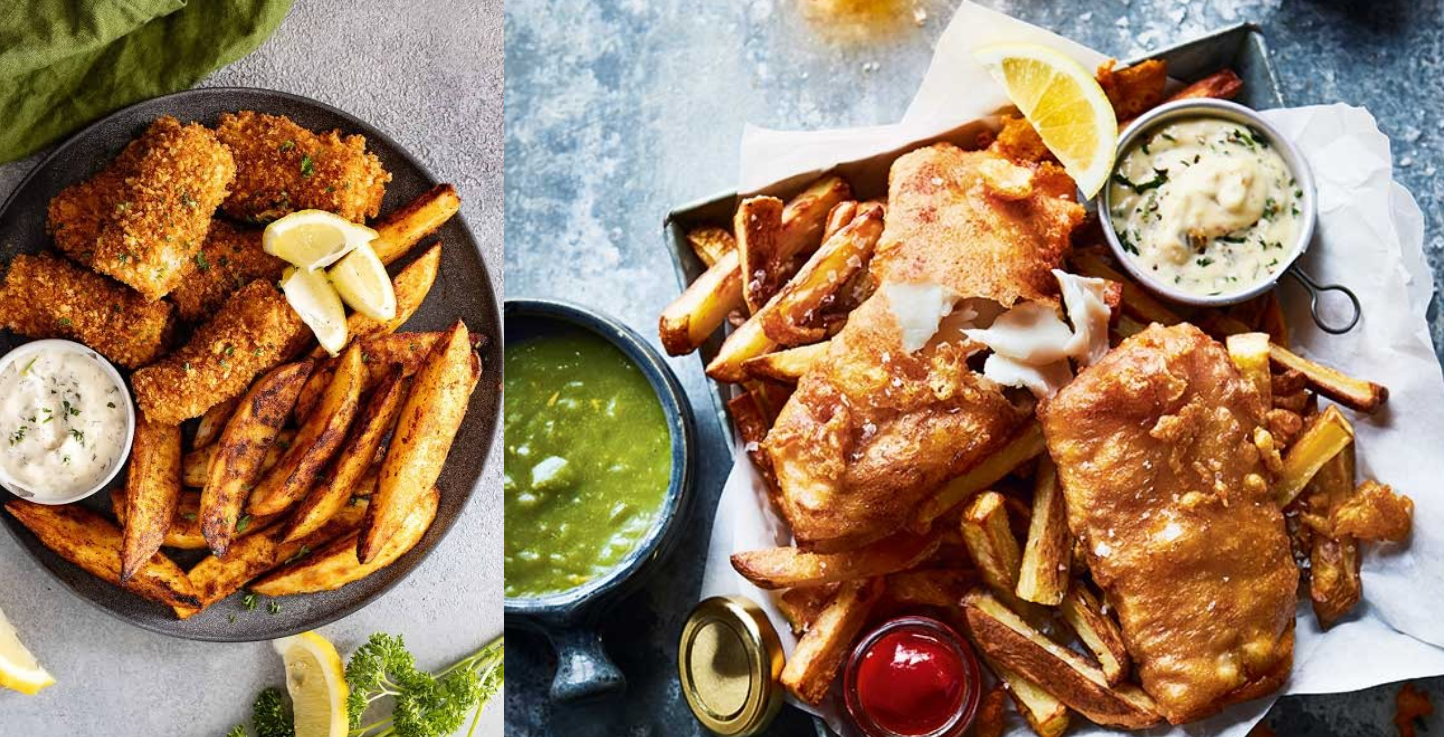
Crispy fish, golden fries, a little sauce on the side. Sounds simple. Genuinely hard to nail though, honestly. Strongly tied to British food culture, sure, but it’s caught on in plenty of other places too, US included.
Ever wondered what actually separates good fish and chips from a plain fried fish dinner? Comes down to a handful of small things, really. Fish, batter, potatoes, cooking temp, even how you plate it adds up more than people expect it to.
What Are Fish and Chips, Exactly
Battered, fried fish alongside fried potatoes. That’s the “chips.” In the US, basically what people call French fries.
Fish gets coated in a light batter, deep-fried till crisp and golden. Inside stays moist and flaky though, not dry that’s the whole trick, and it’s trickier than it sounds, believe me.
Strongly connected to the UK. But American diners know it well by now too. Restaurants, pubs, seafood shops, casual spots, all doing their own version of it.
A Brief History, Since People Always Ask
Actual history’s messier than it looks at a glance, honestly.
Fried fish was already around in Britain before fish and chips became a recognised thing. Jewish immigrants from Portugal and Spain brought fried fish over. Fried potatoes caught on separately, own path entirely.
Sometime in the 19th century, the two came together. Popular, affordable, fast that’s what it became for regular working people.
Mattered a lot for working-class communities specifically, since fish and potatoes were relatively cheap and easy to get back then. Shops selling it, “chippies,” popped up all over Britain, quick.
Spread beyond the UK eventually. Own regional twists elsewhere too, over time.
What Fish Works Best Here
Picking the right fish’s genuinely one of the bigger calls you’ll make.
Firm, mild white fish tends to win out. Holds shape while frying, gives that flaky bite inside the crispy coating everyone’s after. Cod, haddock, pollock, halibut, Pacific cod all fine, depends what’s around you.
Cod’s the most familiar pick, especially at restaurants. Haddock’s popular too, slightly stronger flavour, still mild enough for the batter to shine through.
Buying fish? Fresh, firm, no strong fishy smell. That smell’s usually a bad sign trust your nose there, it won’t lie to you.
Ingredients You’ll Actually Need
Basic recipe, short shopping list. Small mercy, that.
Fish side fresh white fish fillets, all-purpose flour, baking powder, cold water or beer, salt, pepper, oil for frying. That’s genuinely most of it, right there.
Chips side potatoes, frying oil. Russets are the practical US pick, plenty of starch, crisps up outside while staying fluffy inside.
Some recipes toss in paprika, garlic powder, onion powder. Optional. Depends what flavour you’re chasing that day.
Getting a Crispy Batter, the Real Trick
Batter’s where most homemade attempts either succeed or fall apart, completely.
Keep the liquid cold. Cold water or beer makes a lighter, crispier coating once it hits hot oil. Genuinely a noticeable difference.
Don’t overmix it. A few small lumps aren’t a problem. Mixing till perfectly smooth can actually make the coating heavier sounds backwards, but it’s true.
Thick enough to coat the fish, not so thick it turns doughy. Lightly flouring the fillet first helps the batter grip more evenly too. Small step. Worth it every time.
Temperature Matters More Than People Think
Oil temperature has a huge effect on how this all turns out.
Not hot enough, batter soaks up oil, goes greasy fast. Too hot, outside browns before the fish actually cooks through.
Most recipes land somewhere around 350°F to 375°F for deep-frying, depending on the stage.
A kitchen thermometer makes this way easier. No more guessing at it.
Don’t overcrowd the pan either. Too many pieces drops the oil temp fast, uneven cooking follows right after.
Making Better Chips, Not Just Fries
Potatoes deserve just as much attention as the fish. People forget this constantly, weirdly.
Cut similar sizes so everything cooks evenly. Obvious, sure. Skipped anyway, all the time. Rinsing or soaking cut potatoes pulls out surface starch, helps crispness.
For really crispy chips, plenty of cooks do a two-stage fry. Lower temp first, softens the inside. Fry again hotter after, for that crisp exterior.
After frying, drain excess oil before salting. Salt sticks better that way, small detail that matters.
What to Actually Serve With It
Plenty of ways, depends what you’re in the mood for.
Traditional sides malt vinegar, tartar sauce, peas. American spots often throw in lemon wedges, coleslaw, ketchup, other sauces too.
Tartar sauce’s particularly popular. Creamy, slightly tangy, works genuinely well against fried fish.
A squeeze of fresh lemon brightens it up too, cuts through some richness from the coating nicely.
Common Mistakes People Make
Fairly straightforward at home, honestly. A few mistakes trip people up regularly though.
Wet fish is a big one. Pat fillets dry before battering. Excess moisture stops the coating from sticking, and that’s a pain to fix once it’s already happened.
Letting cooked fish sit too long before serving is another one. Batter loses its crispness fast, so eat it soon after cooking, not later.
Wrong oil temperature’s frequent too. Thermometer helps a lot here cheap fix for a common problem, really.
Skip overcrowding the cooking area too. Give each piece room to actually fry properly.
Is Fish and Chips Actually Healthy
Fish itself’s nutritious. Protein, plus omega-3s depending on the variety. Traditional fish and chips though, being fried, adds calories and fat through the batter and oil.
Lighter version at home’s doable. Less oil, baking, air fryer instead. Won’t taste quite the same, sure but can still be genuinely satisfying on its own.
Overall nutritional value comes down to portion size too, and whatever you’re serving alongside it.
Fish and Chips in American Food Culture
Originated in Britain, obviously. Americans have embraced plenty of variations over time, made it their own in a lot of places.
Find it in seafood restaurants, British-style pubs, food trucks, casual dining spots everywhere now. Some swap in local fish instead of cod or haddock, giving it a distinctly regional feel.
That flexibility’s honestly part of why it’s stayed popular this long. Basic idea stays the same, while fish, seasonings, sauces, sides all shift around it depending on where you land.
FAQs
What fish is best for fish and chips?
Cod and haddock are the most popular picks mild, flaky, firm enough for frying.
Why is my fish batter not crispy?
Oil’s probably not hot enough, or the batter’s too thick. Keeping it cold helps too.
What potatoes are best for fish and chips?
Russets work well thanks to their high starch content, giving crisp edges and fluffy centers.
What sauce goes with fish and chips?
Tartar sauce is the classic pick, though malt vinegar and lemon are common too.