
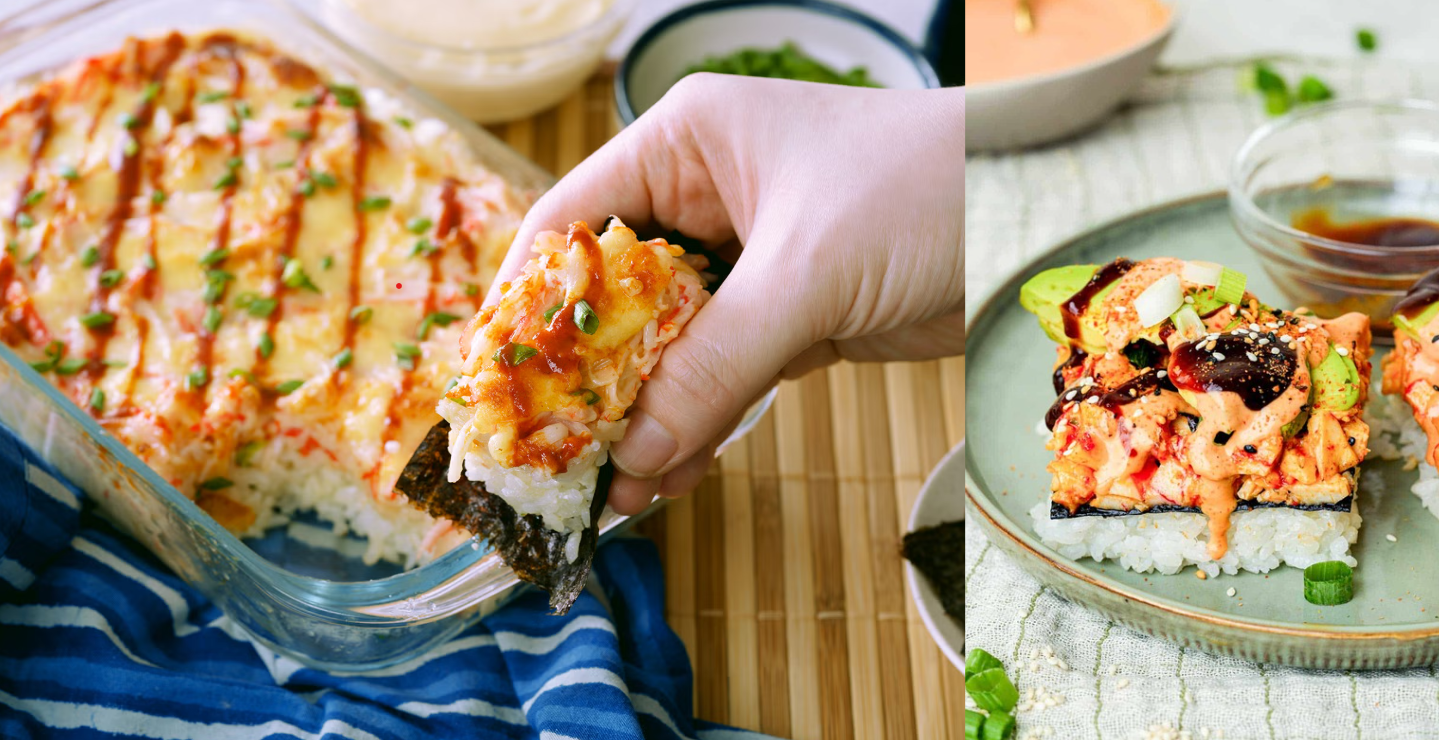
Sushi bake’s become a genuinely popular way to get sushi flavors without rolling pieces one by one, which honestly nobody has patience for on a weeknight. Instead of prepping everything separately, ingredients just layer into a baking dish, cook till warm and creamy. Simple enough for a Tuesday, works great for a crowd too.
Best part, honestly how easily you can swap ingredients based on whatever’s sitting in your fridge. Imitation crab, salmon, shrimp, tuna. Plenty of ways to make it yours.
What Is Sushi Bake, Exactly
A warm, layered dish, inspired by sushi flavors. Usually starts with seasoned sushi rice. Then a creamy seafood mixture. Then toppings on top.
Once baked, typically served with roasted seaweed sheets. Scoop a small portion on, add whatever toppings you like avocado, cucumber, green onions, sesame seeds.
Unlike traditional sushi, no stress over rolling rice perfectly. That’s the whole appeal if you love sushi but want something way easier to actually pull off on a normal night.
Essential Ingredients You’ll Need
Sushi Rice
Short-grain’s the way to go. Gets slightly sticky, holds the layers together. Season with rice vinegar, a bit of sugar, salt.
Let it cool a little before assembling, actually. Rice still piping hot can make everything else softer than you’d want.
The Seafood Layer
Plenty of options here, genuinely. Imitation crab’s one of the most common picks, affordable, mixes easily with creamy stuff.
Cooked salmon works well too. So does shrimp, canned tuna, cooked crab, or a mix of several kinds. Flexible part of the whole dish, this.
Just make sure whatever you use is fully cooked before it goes in. No exceptions there, seriously.
Mayonnaise
Gives the mixture its creamy texture. Japanese-style mayo’s popular richer, slightly tangy. Regular mayo works fine too, honestly, don’t overthink it.
Don’t go overboard though. Too much makes the filling heavy, drowns out everything else you’re trying to build.
Cream Cheese
Adds richness, helps create that soft texture separating sushi bake from regular sushi entirely.
Let it soften at room temp first. Makes mixing with seafood and mayo way easier, less lumpy, less annoying.
Seasonings and Sauces
A few simple additions bring it together. Soy sauce, sesame oil, sriracha, furikake worth having on hand, all of them.
Furikake especially earns its spot here. Seaweed, sesame, seasoning, all in one shake. No need for five separate jars.
How to Layer It
Once your ingredients are ready, this part’s fairly straightforward.
Spread seasoned rice evenly across the bottom of a baking dish first. Press gently, just enough to hold, not packed down too hard.
Add the seafood mixture next, spread it across. Sprinkle furikake or whatever seasoning on top.
Bake till heated through, top lightly golden in spots here and there. After baking, add fresh toppings avocado, cucumber, green onions, whatever you’ve got around.
Serve with roasted seaweed so people build their own bite.
Tips for Making It Better
Don’t Overcook the Rice
Too soft, whole thing goes mushy fast. Cook per package directions, skip extra liquid you don’t actually need.
Keep the Seafood Balanced
Should still taste like itself, honestly. Enough mayo and cream cheese for creaminess, sure just don’t drown it completely.
Add Fresh Toppings After Baking
Avocado, cucumber, green onions add once it’s out of the oven. Not before. Keeps them fresh, gives better texture contrast at the end.
Watch the Salt
Soy sauce, furikake, other seasonings already carry plenty of salt on their own. Taste the mixture first. Easy step, gets skipped constantly.
Easy Variations Worth Trying
One of the best things about this dish, genuinely, is how flexible it is.
Want it spicy? Mix sriracha into the filling, or drizzle spicy mayo on top before serving. Salmon version works great cooked salmon, cream cheese, mayo, green onions. Shrimp’s good too if you want something a touch lighter overall.
Can combine different seafood too, instead of sticking to one type. Rice and creamy sauce base handles experimenting just fine.
What to Actually Serve With It
Usually roasted seaweed sheets, but plenty of other sides work well.
Cucumber, avocado, edamame, pickled ginger, green onions all solid picks. Sesame seeds add a bit of crunch, extra spicy mayo’s there for anyone wanting more heat.
Part of a bigger meal? Miso soup or a simple cucumber salad rounds it out nicely.
Is Sushi Bake Good for a Party
Yes, genuinely convenient for casual gatherings. Instead of rolling individual sushi, prep one big dish, let guests build their own bites at the table.
Put seaweed, toppings, sauces around the dish so people pick what they want. Saves a ton of time versus hand-rolling a mountain of sushi one piece at a time.
How to Store Leftovers
Let it cool before fridge. Covered container, keep fresh toppings like avocado and cucumber separate if you can manage it.
Reheating, make sure the seafood mixture heats through properly, all the way. Add fresh toppings after reheating to bring back some of that original texture.
Common Mistakes to Avoid
A few small things genuinely affect the final result.
Wrong rice type’s the most common one. Long-grain just doesn’t give the sticky texture short-grain does. Not even close, really.
Too much sauce is another issue. Creamy layer matters, sure, but overly wet makes the rice soggy fast.
Also better to add fresh toppings after baking, not before. Avocado and cucumber lose texture fast if they sit in the oven too long.
Go easy on spicy sauces early too. Easier adding more heat later than fixing something that’s already gone way too spicy.
FAQs
What is sushi bake made of?
Usually sushi rice, seafood, mayonnaise, cream cheese, and various toppings.
Can I use regular rice?
Short-grain works best, but other sticky rice varieties work too.
What seafood works best?
Imitation crab, salmon, shrimp, and tuna are all popular picks.
Can sushi bake be made ahead?
Yes. Prep it ahead, refrigerate, then bake and add fresh toppings just before serving.