
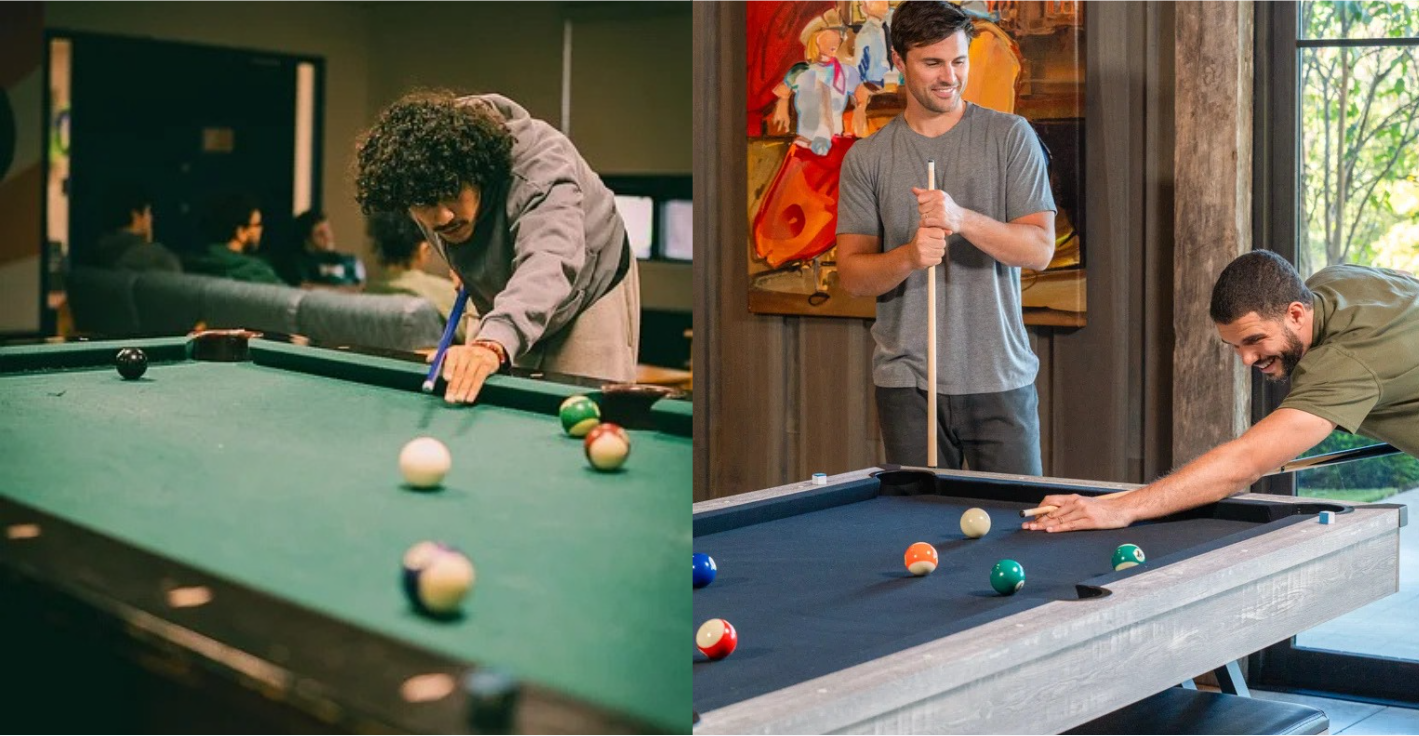
Buying a pool table sounds fun, and it is. Until you realise the table is huge, heavy, and your basement is smaller than you thought. Looks matter, sure, but they’re maybe a third of the decision. Size, materials and how often you’ll actually play matter more.
So before you spend real money, here’s what’s worth knowing.
What is a pool table, really?
It’s a table built for cue sports. A flat surface covered in cloth, six pockets, rails round the edges, and a solid frame underneath holding it all up.
That surface has to stay level. Even a tiny tilt makes balls drift, and you’ll blame your aim for months before noticing. This is why a decent table has a strong, stable base, and why cheap ones often feel off.
Some tables are made for casual family fun. Others are built for people who take the game seriously.
Sizes
Here’s the catch most buyers miss: the table is only half the story. You also need room around it to swing a cue.
7-foot. The popular pick for apartments, small game rooms and tight basements. It takes up less space and still gives a proper game. Great for family nights or the odd practice session.
8-foot. Probably the sweet spot for most homes. You get a bigger playing area without needing a room the size of a pub. If you can’t decide, this is a safe bet.
9-foot. Bigger surface, more serious play, and it needs a lot more clearance on every side. Got the space and plan to play a lot? Go for it. Otherwise it’ll just crowd the room.
Types
Traditional. Wooden legs, detailed rails, that classic old-club look. Fits well in a room with vintage or traditional furniture. Some people buy these more for the look than the game, and that’s fine.
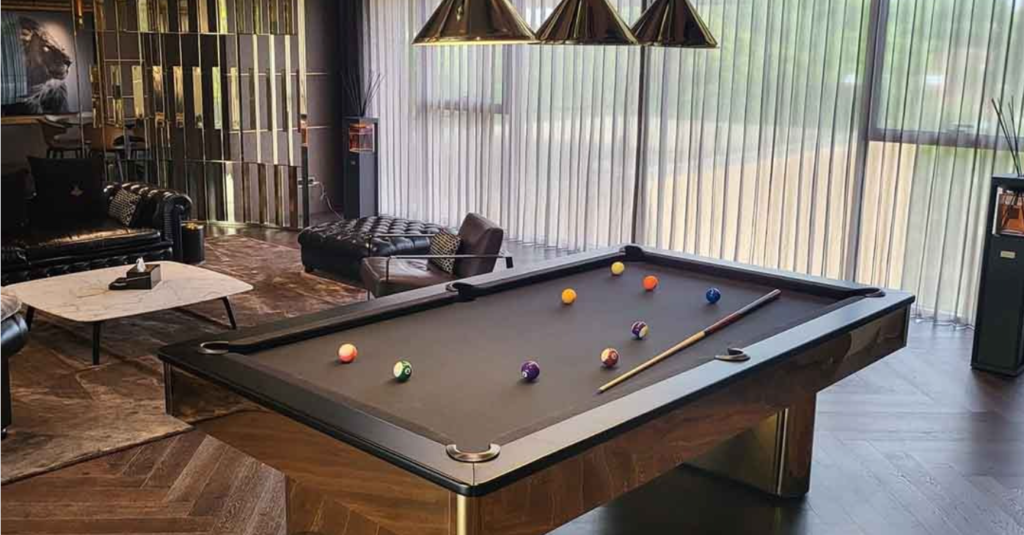
Modern. Cleaner lines, simpler frames, darker finishes, sometimes metal details. If your house is minimal and contemporary, a heavy carved wooden table will look out of place.
Convertible. These double as something else, like a dining table or desk, once you put a cover on top. Handy if the room has to do two jobs.
Features that matter
Playing surface. Most good tables use slate under the cloth, because it’s smooth and stays flat. Cheaper tables use other materials. They’re okay for casual games, but the feel is different, and you’ll notice it.
Cloth. It affects how smoothly balls roll. Comes in different colours and materials. Better cloth rolls more consistently and tends to last longer if you look after it.
Rails and cushions. Cushions send the ball back into play. Good ones give consistent bounces. Worn or badly made ones don’t, and the ball does odd things.
Frame and legs. Sturdy matters here. Bigger tables are seriously heavy, so weak legs are a real problem.
How much room do you need?
More than you think. Players need space to stand and pull a cue back without hitting a wall.
Picture a 9-foot table in a room barely wider than the table. Playing in there would be miserable. So measure the room, then look at furniture, doors and walls near the table. Check the cue length you’ll be using too. A table can fit physically and still leave you unable to take a comfortable shot.
What to check before buying
Start with where it’s going and how often you’ll play. Then look at room size, table size, surface material, cloth, frame, cushions, design, leveling system, budget and installation. That sounds like a lot, but it’s mostly common sense once you start.
Don’t forget delivery. These things are awkward to move, and some need professional assembly and leveling.
Looking after it
Keep the surface free of dust and debris, and clean the cloth the way the maker says. No food or drinks on the table, ever. Spills and cloth don’t mix.
Check that it stays level too. Floors shift over time, and the table might need adjusting. When nobody’s playing, put a cover on to keep off dust and accidents.
Is it worth it?
If you love playing and you have the space, yes. A pool table also turns into a social spot in the house. Guests and family end up gathering around it.
Just match the table to your room, habits and budget. If you only play now and then, a big pro-style table is overkill. If you’re serious about the game, spending more on construction and a quality surface makes sense.
FAQs
What’s the most common home pool table size?
8-foot. It balances playing area and space needs well.
How much room does a pool table need?
Enough space around it for players to use a cue comfortably. The exact size depends on the table and cue length.
Is slate better?
Usually, yes. It’s smooth and stable, and common on better tables. But the best choice depends on your budget and how you’ll use it.
What size is best for beginners?
A 7-foot or 8-foot table is a practical start, especially in a smaller room.