
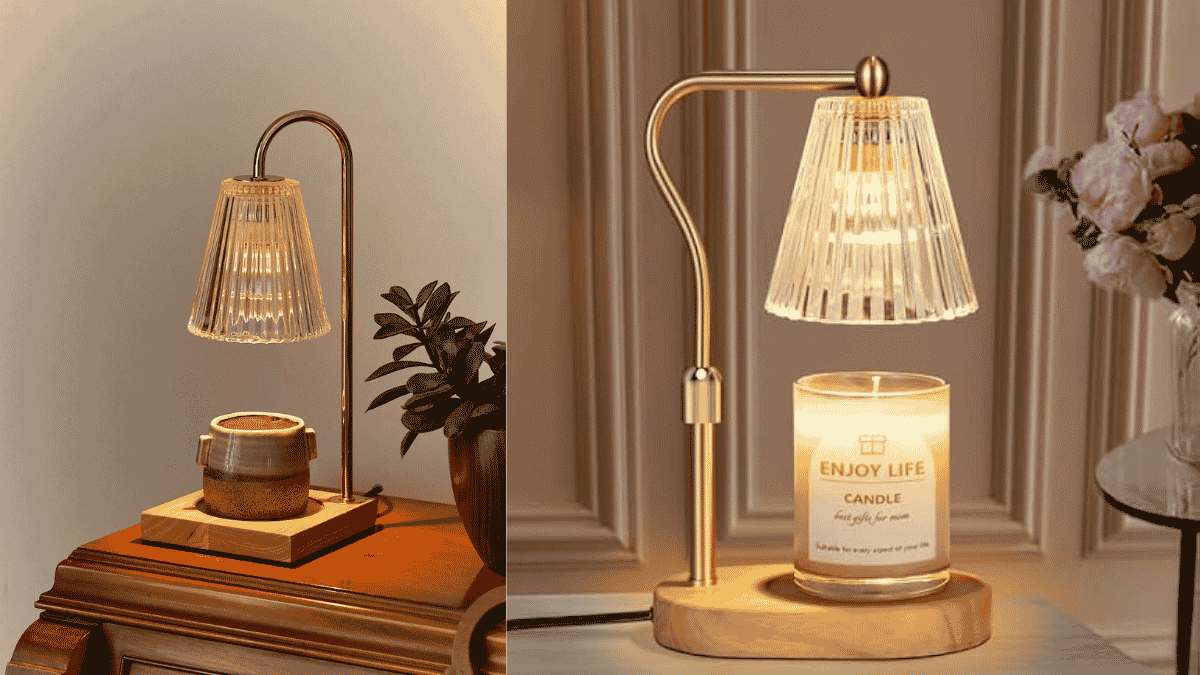
Why Scent Lovers Are Trading Matches for Candle Warmer Lamps
Candles smell great until the wick sinks down the center, leaves half the wax stuck to the glass, and covers your room in smoke. When you spend good money on a three-wick jar, watching thirty dollars worth of scented wax go straight into the trash hurts. Fire simply burns too fast, scorches the fragrance oils, and leaves dirty soot on your walls.
A candle warmer lamp fixes this mess by flipping the heat source. Instead of burning the wick, an electric halogen bulb shines downward onto the jar. The wax liquefies from the surface down. You get a much stronger scent throw, zero smoke, and a jar that lasts twice as long.
Getting good results still takes a little know-how. You need the right bulb wattage, the right height above the jar, and a reliable way to clean out old wax.
Why Burning Your Candles Destroys Half The Wax You Paid For
Lighting a cotton wick creates an open flame that hits over one thousand degrees Fahrenheit. That kind of heat is simply too aggressive for scented wax. It burns off subtle top notes before the fragrance ever has a chance to circulate through your room.
High Flame Heat Burns Up Scent Oils Too Fast
An overhead candle lamp runs much cooler, warming the wax pool between one hundred and forty and one hundred and sixty degrees. Fragrance oils release cleanly at this temperature. The scent spreads across the room in minutes, and you never smell burnt wick carbon mixing with your perfume.
Electric Heat Keeps The Whole Jar Flat With Zero Waste
Fire needs fuel, so an open flame physically consumes your wax as it burns. A candle warmer does not consume the wax at all.
Only the scented oils lift into the air. The wax base stays inside the jar, which is why a candle warmed by an electric bulb lasts two to three times longer than a candle burned with matches.
How A Downward Heat Lamp Actually Melts Candle Wax
The mechanics are straightforward. A small halogen bulb sits four to six inches above the open jar. Once you flip the switch, the bulb throws a tight cone of heat directly onto the surface.
Top Heat Melts The Surface In Under Ten Minutes
So how do candle warmers work without an open flame? The halogen bulb targets only the top half-inch of wax. Within ten minutes, you get a clean liquid pool throwing scent into the air. The wax underneath stays cool and solid. That solid bottom keeps the wicks centered and prevents the glass base from heating up.
You Never Have To Deal With Tunneling Or Buried Wicks Again
Tunneling happens when a candle gets blown out before the melt pool reaches the edges of the jar. The wick sinks into a pit, and the candle becomes almost impossible to light again.
Setting that tunneled jar under a lamp for an hour melts down the high wax shoulders. The surface resets flat across the entire jar with no scraping required.
Why Heating Plates Fall Short Compared To Overhead Lamps
Bottom hot plates have been around for decades, but they have major flaws compared to modern overhead fixtures.
Bottom Plates Take Far Too Long To Warm The Room
A candle warmer plate heats the bottom of the glass jar through direct contact. That heat has to slowly climb through four inches of solid wax before any scent reaches the air. You end up waiting forty-five minutes just for a weak scent throw. Overhead lamps melt the surface pool almost instantly.
Trapped Bottom Heat Puts Fragile Glass At Risk
Bottom heating also stresses the glass. Glass expands as it gets hot.
A hairline crack in the base can split wide open when trapped over a heating plate, dumping hot wax across your furniture. Overhead lamps keep the bottom of the jar cool and stable.
The Exact Bulbs You Need To Get Real Heat
A warmer is only as useful as the bulb inside it. Putting the wrong bulb in the socket is the most common reason a new lamp fails to melt wax.
Why Standard LED Household Bulbs Will Never Melt Wax
LED bulbs are built to produce light while staying cool. If you put an LED into your warmer, your candle will stay rock hard.
You need a dedicated candle warmer light bulb that runs on halogen technology. Halogen bulbs produce direct radiant heat specifically engineered to melt wax surfaces.
Picking Between Thirty-Five And Fifty Watt Halogen Bulbs
Most lamps take a GU10 halogen bulb with two twist-and-lock pins on the base. You push the pins in and turn the bulb ninety degrees to seat it.
Thirty-five watt bulbs work well for small jars, single-wick candles, and smaller spaces like bathrooms. Fifty-watt bulbs are better for large three-wick jars and open living rooms. Check the label inside the shade to make sure your fixture handles fifty watts before buying replacements.
What To Buy When You Own A Cube Wax Melter
Tabletop cube melters take different hardware than large jar lamps. These smaller units usually run on screw-in wax warmer bulbs with an E12 candelabra base.
Others use a small round wax melt light bulb or a candle wax warmer bulb. Keep a few spare light bulbs for wax warmers in a drawer so you never get caught with a dead socket. Always check the stamped base code on your old bulb before buying bulbs for wax melters online.
Three Features Worth Paying For When Shopping For A Warmer
Cheap discount store warmers usually have fixed stems and simple toggle switches. They look decent, but paying a little more for three specific features makes daily use much easier.
Adjustable Height Keeps The Bulb At The Perfect Distance
Finding the best candle warmer starts with the stem design. Jars come in all shapes and sizes. A small votive sits low, while a large apothecary jar sits high.
If the lamp neck is fixed, small jars sit too far from the bulb to melt properly. A lamp with an adjustable stem lets you keep an ideal three-inch gap above any jar. If you already have a fixed-height lamp, set a thick wooden coaster under small jars to lift them closer to the heat.
A Built-In Dimmer Prevents Burning Out Fragrance Too Fast
Running a halogen bulb at full blast all the time is a quick way to ruin a candle. Too much heat cooks off all the fragrance oils in a couple of days.
A dimmer switch lets you start the lamp on high for fifteen minutes to melt the top layer, then dial it down to medium. The wax stays melted, but the fragrance lasts much longer.
Automatic Timers Give You Peace Of Mind At Night
Halogen lamps give off a soft, warm glow that makes people sleepy on the couch. A timer switch with two, four, and eight-hour buttons turns the lamp off on its own.
You never have to climb out of bed to check the switch, and your candle will not burn through its scent while you sleep.
What To Do When Your Candle Stops Smelling But The Jar Is Still Full
After a couple of weeks, almost every new owner thinks their lamp broke because the candle stopped throwing scent. In reality, the lamp is working fine.
Why Electric Warmers Leave Wax Behind
Fire turns wax into smoke and carbon. Electric lamps only vaporize the fragrance oils, leaving the wax volume unchanged.
After ten to fifteen warming sessions, all the scent oils in that top half-inch are gone. What you have left is a pool of scentless wax sitting on top of fresh, scented wax underneath. That spent layer blocks the heat from getting to the good wax below.
How To Pull Out The Scentless Top Layer In Seconds
Clearing out that spent wax takes about thirty seconds using standard cotton balls:
- Turn the lamp on for fifteen minutes until the top layer liquefies.
- Turn the lamp off and pull the plug from the wall.
- Drop two large cotton balls into the melted wax.
- Let the cotton soak up the liquid wax.
- Lift the cotton balls out with metal tweezers and throw them in the trash.
Never pour liquid wax into a sink drain. It hardens inside cold pipes and creates stubborn clogs that cost hundreds of dollars to clear. Cotton balls soak up the spent layer cleanly, exposing fresh scented wax for your next use.
The Real Health Differences Between Open Flames And Electric Warmers
Indoor air quality is one of the biggest reasons people put away their matches. Burning candles releases soot and combustion byproducts that you simply do not get with an electric heat source.
Clean Electric Heat Stops Black Soot Stains On Your Walls
If you run one in a closed bedroom, are wax warmers safe for everyday use? Yes, because they do not produce carbon soot.
Lit wicks release fine black soot particles that float through your house, stain your walls, and settle into air filters. Breathing that soot irritates your nose and throat. Electric lamps melt wax cleanly without releasing soot into your rooms.
Choosing Cleaner Wax Blends For Sensitive Lungs
When choosing scented products, people often ask: are wax melts toxic to breathe indoors? The answer depends entirely on what ingredients went into the wax.
Cheap paraffin mixed with synthetic phthalate fragrances can trigger headaches and stuffy noses in small, unventilated rooms. Choosing clean soy, beeswax, or coconut wax blends with phthalate-free oils keeps your air clean. Keeping a door slightly open also helps air move freely while the lamp is on.
Keeping Household Pets Safe Around Heated Scented Wax
Animals have much more sensitive noses than people, and their bodies process certain oils differently. Taking a few precautions keeps your pets comfortable and safe.
Why Certain Plant Oils Make Cats Sick
Cats lack a specific liver enzyme called glucuronosyltransferase, which breaks down botanical compounds. Concentrated tea tree, eucalyptus, peppermint, citrus, and cinnamon oils can cause coughing, watery eyes, and lethargy in cats.
Dogs also react poorly to concentrated pine and pennyroyal oils. If your pet squints or leaves the room when the lamp runs, switch to milder scents like vanilla or go unscented.
Simple Placement Rules To Avoid Accidents
Pets running through the house can easily bump a wobbly table and knock hot wax onto the carpet. Keep your lamp on a heavy, stable table out of reach of tails and paws.
Leave room doors open so pets can move away if a scent feels too strong. For more advice on keeping your home safe for animals, read our pet care guide before warming concentrated plant oils.
Everyday Safety Habits To Keep Your Lamp Running Without Issues
Halogen bulbs produce real heat, so treat your lamp like any other small home appliance. A few basic habits protect your surfaces and your electrical outlets.
Choosing The Right Surface To Avoid Heat Marks
Set your lamp on a hard, level surface like stone, finished wood, or tile. Keep it off soft blankets, loose tablecloths, or bedding that could trap heat.
Keep curtains, papers, and mail at least twelve inches away from the lamp shade. Adding small rubber bumpers under the base keeps the lamp from sliding on slick tables.
Plugging Directly Into The Wall Prevents Cord Strain
A fifty-watt halogen bulb pulls steady current. Avoid plugging into crowded power strips, and never tuck power cords under rugs where people walk on them.
Plug directly into a wall outlet whenever you can. For a closer look at cord ratings, circuit loads, and preventing household hazards, check our home electrical safety breakdown to keep your home setup sound.
Give the lamp a rest after four or five hours. Letting the socket cool down keeps the fixture running reliably and stops bulbs from burning out early.
Practical Answers To The Most Common Warmer Questions
Here are direct answers to the situations most new warmer owners run into during their first month.
Can you leave a candle warmer lamp on all night while sleeping?
No. You should never leave a heat-generating appliance running while you sleep. The halogen bulb stays hot enough to cause problems if something falls against the shade. Use an automatic timer set for two hours, or switch the lamp off before getting into bed.
Why does my candle still look full after running the warmer for weeks?
Electric warmers do not burn wax away. Open flames consume wax as fuel, but halogen heat only releases the fragrance oils into the air. The physical wax stays in the jar until you soak it out with cotton balls.
Can you use any regular glass candle jar under a warmer lamp?
Most commercial candles in thick glass jars work fine. Avoid thin drinking glasses, plastic containers, or delicate handmade pottery. Direct halogen heat can crack weak glass and cause hot wax spills.
How often should you remove the top wax layer?
Most candles provide twenty to thirty hours of scent per layer. When you turn the lamp on and realize you can barely smell the fragrance, soak up the top half-inch of wax with cotton balls to expose fresh scented wax.
Will lighting the wick after warming ruin the candle?
No, you can still light the wick later if you want to. Keep the wick upright while the wax cools down, and trim it to one-quarter inch before lighting it with a match.
[…] While open flame candles pose serious indoor fire hazards, using safe flame-free options like a candle warmer lamp allows you to enjoy pleasant scents and gentle warmth without lighting open wicks. Taking care of […]