
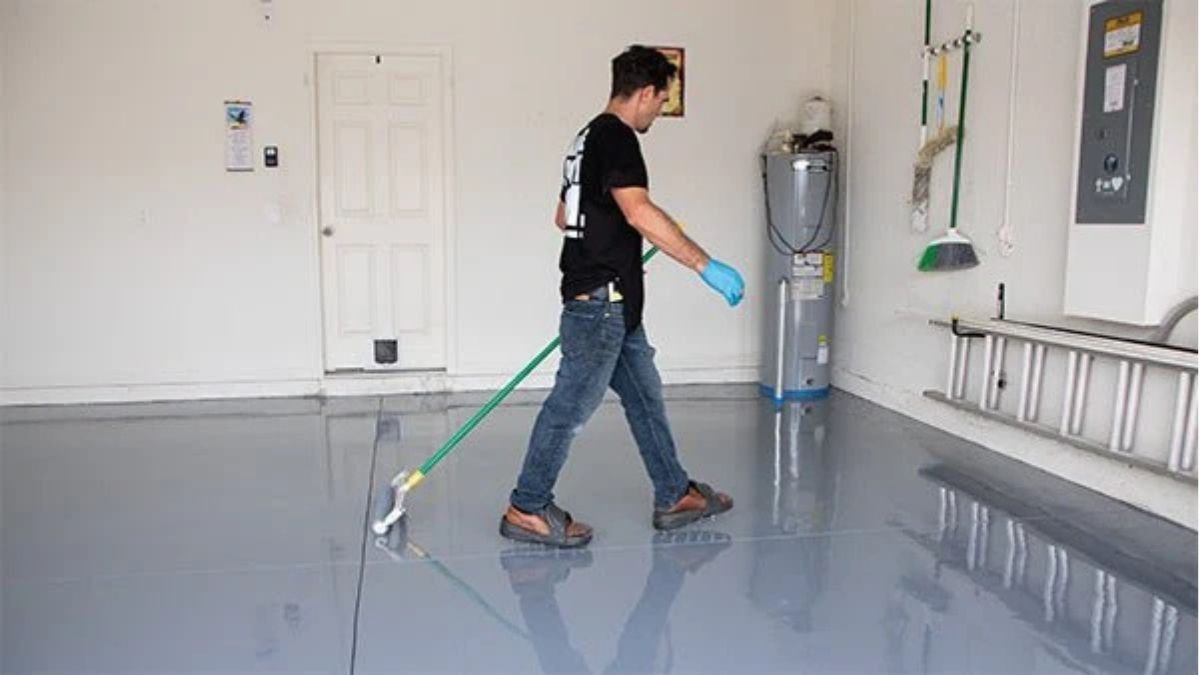
Putting down an epoxy floor is one of the best ways to clean up an old concrete slab. Homeowners and shop owners put an epoxy floor coating over concrete to stop oil stains and wipe out gray dust. Bare concrete soaks up motor fluids and sheds gray dust every time you walk across it.
Today you have lots of choices for how your floor looks. You can pick metallic swirls, color chips, or solid gray. Good epoxy floor coatings protect concrete underneath from tool drops and salty winter slush. This guide covers floor types, slab prep, fixing cracks, tools, costs, and routine epoxy floor maintenance.
What an Epoxy Floor Really Is and How It Works
An epoxy floor is completely different from a can of standard porch paint. Regular paint dries when water or paint thinner evaporates into the air, leaving behind a thin film. That thin film scratches easily and peels up after a few months of foot traffic.
Real epoxy flooring works through a chemical mix of two separate liquids. You mix clear resin with a hardener, and the two parts harden into tough plastic. This hard plastic grips concrete pores tightly. The resulting epoxy resin concrete floor handles heavy cars, dropped tools, and fluid spills.
Professional installers put down two part solid epoxy with no water or solvents added. These thick mixes stay full thickness without shrinking as they dry.
The Real Difference Between Floor Paint and True Resin
Shoppers often confuse basic epoxy floor paint with thick resin. Basic store paint is mostly latex with just a tiny bit of epoxy added.
Looking at garage floor paint and epoxy side by side shows why latex fails so fast. Thin latex paint scuffs and peels when hit with oil. Solid epoxy creates a tough shell that cars can drive on without chipping.
Popular Types and Styles of Epoxy Floor Coatings
The finish you pick depends on room use, lighting, and budget. You can find styles for living rooms or rough garages.
Shiny Metallic and Marble Looks for Living Spaces
For a modern basement, a metallic epoxy floor has deep color swirls. The installer mixes metallic powder into clear resin and pours it across the concrete.
Using squeegees swirls colors around like rippling water. Pouring black, white, and gray lines into wet base creates a marble epoxy floor. These luxury epoxy floor designs turn gray slabs into shiny floors looking like stone.
Color Flakes and Quartz Systems for Garages and Shops
The most common look for garages is the broadcast flake floor system. You roll out a basecoat and toss decorative color flakes into wet resin until covered.
These vinyl chips hide low spots, trowel marks, and tiny hairline cracks. For greasy commercial kitchens and bathrooms, quartz epoxy flooring uses rough quartz sand grains. These grains take hard hits and resist wear.
If you want to see walkways in the dark, a glow in the dark epoxy floor uses special light-storing powders. The floor soaks up room lighting during the day. It shines a soft green glow along walking paths during blackouts.
Solid Colors for Commercial Buildings and Warehouses
Big factory floors and aircraft hangars usually want a smooth, clean floor in one solid color. Rolling out coloured epoxy floor paint creates clean lines. It reflects overhead shop light, making dim work bays much brighter.
Brands sell diverse epoxy floor colors, from light gray to dark blue. In electronics shops, an anti static esd epoxy floor drains static shocks safely. This stops static electricity from frying delicate computer chips.
For loading docks, a commercial epoxy floor coating takes forklift traffic. These thick floors hold up against wash water and dropped pallets.
Where You Can Put Epoxy Floors Around the House
Epoxy works in many rooms beyond garage bays. Homeowners use it to brighten basements, protect laundry rooms, and seal bathrooms.
Protecting Your Garage Floor from Hot Tires and Salt
The main spot for epoxy is a garage epoxy floor. Cars drag muddy slush, road salt, engine oil, and antifreeze onto bare concrete.
A finished epoxy floor garage blocks soaking liquids. It also stops chalky dust from settling on your storage boxes. Good resin also stops hot tire pickup. This problem happens when hot tires melt cheap floor paint and rip it up.
Kitchen and Bathroom Floors
Modern homes often use smooth epoxy floors inside main living spaces. Putting down an epoxy kitchen floor gives you a flat surface. You get no grout lines to scrub after food spills.
In a bathroom, an epoxy bathroom floor seals out moisture so water splashes do not rot wood subfloors under tubs. Adding a little bit of non-slip sand into the topcoat keeps people from slipping around walk-in showers and bathroom sinks.
Can You Put Epoxy Over Hardwood Floors
Some people wonder about coating wood floors with resin. An epoxy wood floor coating can create a high-gloss shell over wood boards.
However, putting epoxy on hardwood floor boards brings problems. Wood swells and shrinks with humidity, while cured epoxy stays rock hard. If floorboards shift underneath, the hard epoxy top cracks along board seams.
Boxed Kits, Floor Levelers, and Different Kinds of Epoxy
You can buy pre-mixed boxed sets or professional resin buckets. Knowing the difference helps you pick the right product.
Complete DIY Boxed Kits
Beginners usually start with an epoxy floor kit from home centers. These boxes include resin, hardener, etching powder, color flakes, and tools.
One solid boxed kit is the armorclad epoxy floor kit setup. This kit has more real resin than cheap store paint. That gives you a thicker coat that lasts much longer. Getting a complete epoxy garage floor coating kit keeps your layers matched. Your basecoat, color chips, and clear topcoat bond without peeling.
Self Leveling Resins and Floor Levelers
For slight dips or low spots, a self leveling epoxy floor smooths things out. You pour liquid mix onto the slab and spread it evenly.
Gravity pulls liquid into low spots, leaving a flat floor across your workshop. For deep holes or dips, trowel on a polymer epoxy floor leveler. This fills low spots before you roll out your color coat.
You can also roll on self leveling epoxy floor paint to smooth rough laundry rooms. These formulas smooth out as they sit, leaving a shiny finish.
Water-Based versus Solvent-Based Products
You will find water-based, solvent-based, and solids products. A water based epoxy floor paint has low odor and cleans up with water.
However, water-based products dry into thin coats that wear down fast under cars. A solvent based epoxy coating bites deeper into concrete and resists car fluids. Since solvent fumes smell strong, wear a respirator mask and keep windows wide open.
Cleaning the Concrete and Patching Cracks
Almost every failed job happens because someone rushed prep work. Epoxy needs a clean, rough, dry slab to grab on tight.
Testing for Slab Moisture
Before opening cans, always do a simple concrete moisture test on your slab. Lay a square sheet of clear plastic on the slab. Tape all four edges down tight with heavy duct tape.
Wait twenty-four hours, then check for water droplets under the plastic. If you see water droplets, stop immediately. You must put down an epoxy primer for concrete with a moisture vapor barrier epoxy mix. Rising water pressure from dirt below pushes cured epoxy off wet concrete within months.
Scrubbing Oil and Acid Etching
Old garage slabs almost always hold black oil spots. Spray a strong degreaser for concrete floor areas onto oil spots and scrub hard with wire brooms.
Once oil lifts, do an acid etching concrete floor wash using muriatic acid. The acid eats smooth concrete cream and opens tiny pores. When doing muriatic acid concrete cleaning, wear rubber boots, safety glasses, and rubber gloves.
Diamond Grinding for the Best Grip
While acid works on clean slabs, diamond grinding concrete is best for prep. A walk-behind grinder with diamond blades chews off paint, dirt, and weak concrete.
Grinding leaves the slab feeling like eighty-grit sandpaper, giving epoxy top grip. Hook the grinder up to an industrial vacuum with a HEPA filter.
Patching Cracks and Divots
Never roll epoxy over open cracks or crumbling expansion lines. Using epoxy to fix concrete keeps cracks from showing through your shiny floor.
For thin hairline cracks, squirt concrete crack repair epoxy into cleaned gaps. For big holes and deep gouges, mix two-part epoxy concrete repair paste with silica sand. Trowel paste flat with the slab and let it harden before grinding smooth.
How to Put Down an Epoxy Floor Step by Step
A DIY epoxy floor installation takes patience, careful measuring, and quick hands. Follow these simple steps to get a clean, long-lasting floor.
Tools You Need Before You Start
Have all your gear ready before opening the cans.
- Variable speed corded drill with a steel mixing paddle
- Twenty-four inch notched squeegee for epoxy spreading
- Eighteen inch lint-free paint roller with sturdy metal frame
- Spiked shoes for epoxy coating work so you can walk on wet resin
- Infrared thermometer to check the temperature of the concrete
- Jug of acetone for cleaning resin off tools before it hardens
Mixing the Resin and Watching the Clock
Epoxy parts must be measured out carefully based on the instructions on the can. Pour the hardener into the resin bucket and mix with your drill paddle for three minutes.
Keep your drill speed low so you do not whip air bubbles into the thick liquid. Once mixed, the clock starts on the chemical epoxy pot life inside your bucket.
If you leave the mix sitting in the bucket, it gets hot fast and can turn solid within fifteen minutes. Pour the liquid out across the slab in long lines right away to give yourself plenty of working time.
Spreading Basecoats, Flakes, and Clear Coats
Slip on spiked shoes, walk into wet resin, and spread it with a notched squeegee. Have a helper roll over lines with an eighteen-inch roller to smooth ridges.
If using color chips, toss them high toward the ceiling. They rain down evenly across your wet basecoat. Let the base dry overnight, then roll on a tough epoxy topcoat clear layer.
A clear topcoat locks chips, prevents yellowing, and stops scratches. To prevent slick floors when wet, mix an aluminum oxide slip resistant floor additive into your topcoat.
Allow proper curing time for epoxy floor layers before putting weight on them. Keep pets and family off the floor for twenty-four hours.
Wait three days before moving workbenches or heavy shelves back inside. Wait seven full days before parking cars with hot tires on fresh resin.
Pairing a fresh floor with a home bar setup makes a great basement space. Read our ideas for bar cabinet ideas to build a practical room for entertaining friends.
If you are setting up a home workspace, look at practical gaming desk setups that look great over shiny floors. For bigger house projects, check out our guide on kitchen remodeling to plan tough flooring through busy living areas.
How to Clean and Fix Old Epoxy Floors
After years of cars driving in and tools dragging across the floor, even good epoxy can lose its shine. Fixing an older floor does not mean you have to rip all the concrete out.
Recoating Worn Floors
When refreshing an older surface, repainting epoxy floor areas starts with washing. Wash off dirt, scrape away rubber marks, and rinse with clean water.
To repaint epoxy garage floor bays, scuff the topcoat with one-hundred-twenty-grit paper. Sanding dulls gloss and creates tiny scratches for new resin to grip.
Vacuum all sanding dust and wipe with acetone before rolling clear coat. One fresh clear coat brings back bright shine across your floor.
Daily Cleaning and Buffing
Keeping an epoxy floor clean takes little work compared to paint. Sweep up dirt and gravel weekly with a soft microfiber dust mop.
Road grit acts like sandpaper and scratches shiny topcoats over time. For monthly mopping, mix half a cup of clear ammonia into warm water.
Avoid citrus soap or vinegar, as acidic mixes dull clear coats over time. In commercial shops, practicing epoxy floor polishing techniques with low-speed buffers keeps floors shining bright.
How Long It Lasts and Mistakes to Avoid
Knowing the expected epoxy flooring lifespan helps you plan your home maintenance budget. A well-prepped garage floor easily lasts ten to fifteen years before it needs a new topcoat.
Warehouse floors last five to ten years under daily forklift traffic. Most failed floors happen because owners rushed prep or skipped moisture checks.
Learning from common diy epoxy floor mistakes saves money and headaches. Never paint over wet concrete, never mix wrong amounts, and avoid cold weather.
Compare polyaspartic vs epoxy floor systems side by side. Polyaspartic cures faster in freezing weather, but epoxy fills low spots better and costs less.
What It Costs to Do It Yourself or Hire a Pro
Working out your budget means balancing the cost of DIY supplies against hiring an experienced crew.
DIY Kit and Tool Costs
Buying DIY supplies to coat a typical two-car garage costs between two hundred and eight hundred dollars.
- Water-Based Store Kits: Costs $120 to $250 each. Covers about two hundred fifty square feet with a thin coat.
- High-Solids Pro Kits: Costs $350 to $700 each. Gives you thick resin coverage with plenty of color flakes.
- Crack Fillers and Primers: Costs $80 to $180 total. Supplies to patch cracks and stop rising moisture.
- Rollers and Spreaders: Costs $60 to $120 total. Spiked shoes, rollers, frames, and squeegees.
What Local Contractors Charge
Hiring a contractor costs more than buying kits, but they bring big diamond grinding machines that prep the floor right. Total epoxy floor cost usually runs between four and twelve dollars per square foot finished.
Simple one-color solid floors cost four to six dollars per square foot. Color flake systems run five to eight dollars per square foot. Custom metallic floors run eight to fourteen dollars per square foot because of the artistic hand swirling work.
When searching online for good epoxy floor installers near me, check credentials. Ask to see proof of insurance and local finished jobs. Ask each contractor if they prep slabs with diamond grinding machines or just spray acid wash.
Good contractors always grind concrete mechanically, use dust vacuums, and apply moisture primers. Make sure your installer gives you a written warranty covering hot tire peeling.
Common Questions People Ask About Epoxy Floors
How long does an epoxy floor last in a busy garage
A good high-solids epoxy floor in a home garage lasts ten to twenty years with regular cleaning. Its life depends on how well you ground the concrete, using thick resin, and wiping up oil spills promptly.
Can you put fresh epoxy directly over painted concrete
You cannot put fresh epoxy over old concrete paint without having it peel up later. The new epoxy sticks to the old paint instead of the slab, pulling the old paint right off the floor. You must grind off all old paint first.
Why does epoxy peel up under hot car tires
Hot tire pickup happens when warm tires sit on cheap or poorly prepped floor coatings. As hot tires cool down, the rubber grabs the paint and pulls it off smooth concrete. Grinding the concrete rough stops this from happening.
How do you fix cracks in concrete before putting down epoxy
Fixing cracks means opening them up with a small grinder, vacuuming out dust, and filling gaps with epoxy paste. Trowel two-part structural repair paste flat with the slab and grind it smooth after it dries hard.
Does an epoxy floor get slippery when it gets wet
A smooth shiny epoxy floor gets very slippery when wet with water, car oil, or melted winter snow. To keep everyone safe, always mix an aluminum oxide anti-slip powder into your final clear topcoat.
How long do you have to wait before walking or parking on new epoxy
You can walk across a new epoxy floor in socks twenty-four hours after the clear coat goes down. Wait three days before moving tool benches back in, and wait seven full days before parking your car inside.
Can you put epoxy coatings over wood floorboards inside a house
You can coat wood with epoxy, but wood moves as humidity changes while cured epoxy stays completely rigid. If the boards bend or shift underneath, the hard epoxy top will crack along the board joints.
What is the main difference between epoxy paint and real resin
Epoxy paint is regular latex paint with a tiny drop of epoxy added that dries by water evaporation. Real epoxy is a two-part chemical mix that cures into a thick, rock-hard plastic slab covering.