
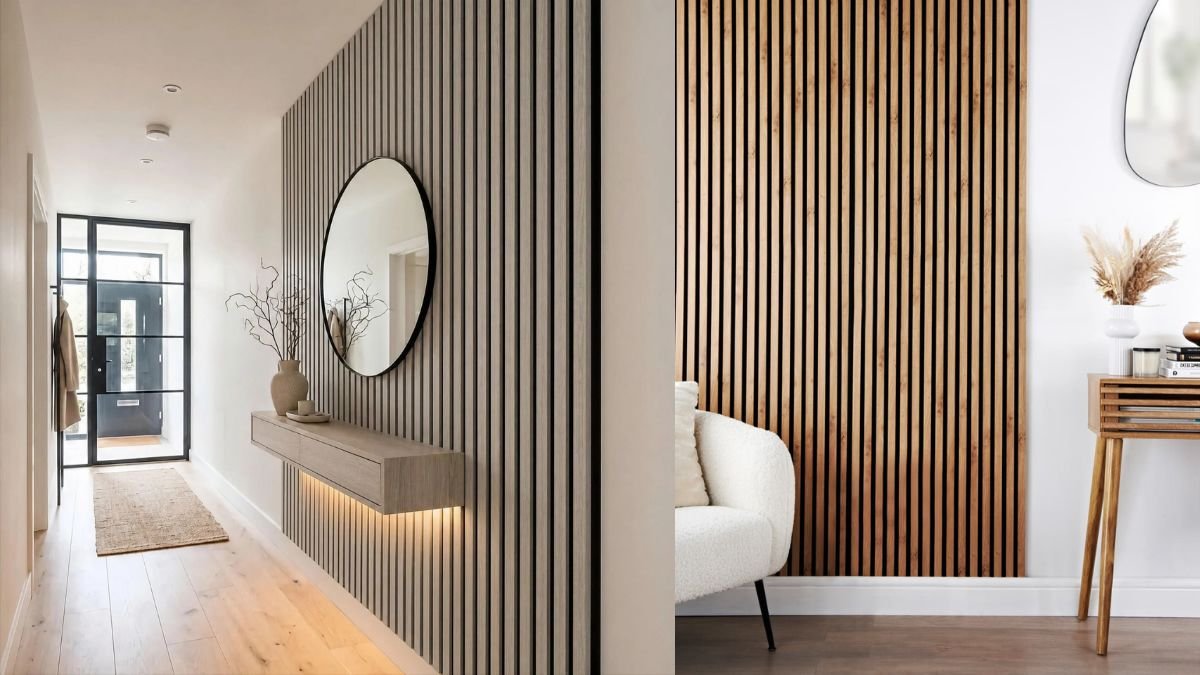
Installing a decorative wall panel gives your room durable protection while covering old wall damage. Homeowners use modern wall panel decor to update plain rooms without hanging new drywall sheets. Standard painted drywall covers most home walls, but it dents easily and shows paint scuffs quickly.
Today you can buy real oak wall panels, waterproof polymer planks, and tongue and groove wall boards. Renters can choose lightweight peel and stick panels for walls that remove without peeling wall paint. This informational guide covers living room paneling ideas, bedroom layouts, waterproof bathroom boards, material prices, and cutting steps.
What Are Wall Panels and Why Use Them
A wall panel is a manufactured board installed over drywall, masonry, or open wall framing. Panels come as narrow planks, large four-by-eight sheets, and square tiles. Homeowners install them to cover wall damage, protect drywall from furniture bumps, and update room style.
Wall panels also serve a practical purpose by improving sound quality inside modern houses. Installing acoustic slat wood panels with sound dampening felt backing traps sound waves and cuts echoes. Hard surfaces like bare drywall, glass windows, and tile floors bounce sound around empty spaces.
Durability is another major reason people choose paneling over standard latex wall paint. Drywall easily picks up scuffs, dings, and gouges from vacuum cleaners, moving chairs, and pets.
Popular Wall Paneling Ideas for Living Rooms
Reviewing fresh paneling ideas and wood paneling ideas helps you decide how much wall area to cover. Living rooms see heavy daily foot traffic, making them great candidates for paneling. You can panel an entire room, build a single focal wall, or cover the lower third with wainscoting.
In rooms with high ceilings, horizontal boards or half-wall paneling make wide spaces feel balanced and grounded. Good planning helps your living room wall cladding fit the exact size of your room. Your ceiling height should guide your choice between vertical and horizontal planks.
Feature Wall Paneling Ideas for Living Room with Panels
Building a dedicated living room with panels behind your sofa or television creates a clean focal area. Many people use modern charcoal slat panels over dark felt to build a modern feature wall. Building a tv accent wall with hidden wires keeps gaming cords and power bricks completely out of sight.
If you want a bright room, simple white paneling reflects natural window light across the space. Trying a shiplap accent wall installation across one wall makes narrow living rooms feel noticeably wider. These feature wall panelling ideas turn plain painted drywall into clean, organized living areas.
Living Room Half Wall Panelling Ideas and Wainscoting
In compact sitting rooms or dining spaces, living room half wall panelling ideas offer a practical compromise. Covering a wall from floor to ceiling is not always necessary or practical in small rooms. Covering the lower third protects walls from chair bumps while leaving upper walls open for paint or photos.
You can install a flat top rail or picture ledge along the top border of your paneling. This small ledge lets you display framed family pictures, small books, or decorative plates without punching nails into drywall. Lower wall protection works especially well in breakfast nooks and busy hallway corners.
Modern Bedroom Panelling Ideas and Headboard Alternatives
Installing bedroom panelling ideas behind a bed frame creates a built-in look without buying bulky bedroom furniture. Full height vertical wooden slat panels run from floor to ceiling to emphasize overall room height.
If you enjoy reading in bed, acoustic felt panels reduce noise transfer through shared apartment walls. Muted gray boards, painted pine planks, and natural oak veneers match various bed linens and bedside lamps.
Creating a Floating Headboard Wall
A popular bedroom project is building an extended panel wall that reaches three feet beyond both nightstands. You can mount bedside reading lamps and flush electric wall plates directly into the wooden panels. This setup eliminates tangled charging cords across carpet floors.
Using peel and stick wood planks makes building a headboard accent wall fast and simple. These planks stick directly to existing paint without requiring heavy air compressors or noisy nail guns.
Vertical versus Horizontal Board Layouts
Selecting board orientation depends on your room dimensions and ceiling height. Vertical boards draw your gaze upward toward the ceiling, making low eight-foot rooms feel taller.
Horizontal board runs stretch narrow bedroom alcoves and make compact sleeping areas look wider. Painting horizontal boards soft white or gentle beige keeps tight bedroom walls from feeling crowded.
Hallway and Entryway Wall Panel Ideas
Entryways and mudrooms handle muddy shoes, wet winter coats, bouncing dogs, and sports bags every afternoon. Installing durable wall panel hall layouts safeguards vulnerable plaster corners and low drywall surfaces from permanent damage.
Pairing board and batten wall paneling with sturdy metal coat hooks creates an organized drop zone for coats. Cleaning dirt off painted wooden wall boards takes only a damp sponge and mild soap.
Choosing Durable Materials for High-Traffic Halls
Hallways need tough panels that resist scratching from belt buckles, pet claws, and heavy grocery bags. Thin vinyl wraps can scratch over time, so solid composite planks or hardwood veneers work best here.
Painting hallway wainscoting with satin or semi-gloss paint creates an extra layer of defense against daily finger marks. Flat matte paints absorb oils from hands and show dirt much faster in narrow corridors.
Displaying Art with Grid Wall Panels
Installing an open grid wall panel in a back hallway or home office gives you flexible hanging options. Wire grid screens and grooved slatwall boards hold small hanging baskets, family calendars, key hooks, and framed photos.
You can rearrange hanging accessories easily as your organization needs change without drilling new holes into drywall. This functional setup keeps everyday entryway clutter organized and easy to find on busy mornings.
Best Wall Panel Materials and Where to Use Them
Selecting the right panel material depends on your room moisture levels, budget limits, and wall flatness. Natural wood brings authentic grain variation, while engineered polymers provide reliable water resistance for wet areas. Reviewing material traits helps you choose the right product for your specific home renovation.
Wall Panel Material Comparison:
- Wood Slat with Felt: Best for living rooms, bedrooms, and home offices. Offers high sound absorption and medium moisture defense.
- Natural Oak Veneer: Best for accent walls and custom cabinetry. Premium grain appearance with low moisture defense.
- Heavy Duty PVC: Best for laundry rooms, garages, and basements. Fully waterproof with low sound absorption.
- Composite WPC: Best for covered patios and high-humidity rooms. High rot resistance with moderate DIY difficulty.
- Decorative Aluminum: Best for kitchen backsplashes and modern fireplaces. Heat resistant and easy to wipe down.
- Peel and Stick Planks: Best for rental apartments and temporary bedroom updates. Easy DIY installation with low water resistance.
Oak Wall Panels and Natural Wood Veneers
For living rooms and main bedrooms, oak wall panels deliver rich grain patterns that manufactured plastics cannot match. Real wood veneer panels feature thin sliced hardwood bonded to stable medium density fiberboard cores.
This engineered composite construction resists seasonal warping far better than thick solid lumber boards. You can pick red oak for classic golden tones or white oak for clean modern Scandinavian styling.
Moisture-Proof PVC Wall Panels
For damp basements, utility rooms, and busy laundry spaces, standard pvc wall panel options give you complete peace of mind. Polyvinyl chloride plastic never rots, swells, or supports mold growth when exposed to standing moisture.
Modern tongue-and-groove PVC planks interlock tightly to stop splashes from reaching drywall surfaces behind the boards. When dusty, smooth PVC boards wipe clean using common household cleaning sprays and microfiber cloths.
Sturdy WPC Wall Panels for Indoor and Outdoor Areas
Wood-plastic composite boards combine reclaimed hardwood sawdust fibers with durable recycled plastics. High-density wpc wall panel products resist scratching, denting, and insect damage far better than untreated wood.
When building an outdoor kitchen or covered porch, exterior-grade wpc wall panel outdoor boards handle summer humidity easily. These composite panels never need yearly chemical stains, sealing oils, or exterior weatherproofing coats.
Waterproof Shower Wall Panels and Tile Panels
Tiling a master shower stall requires days of messy thin-set mortar mixing, tile spacers, and grout sealing. Installing a one-piece shower wall panel or interlocking tile wall panels speeds up your bathroom remodel significantly.
Large waterproof shower wall panels eliminate grout joints where mildew and soap scum collect over time. If you prefer classic bathroom styling, modern tile panels look like real ceramic tile without requiring ongoing grout scrub sessions.
Decorative Metal and Aluminum Panels
In modern spaces and utility kitchens, decorative metal panels add durable protection behind sinks and cooktops. Corrugated galvanized steel sheets work well in rustic farmhouses and industrial basement game rooms.
For clean modern designs, powder-coated decorative aluminum panels provide heat resistance without adding heavy weight to drywall framing. You can clean grease spatters off smooth aluminum panels using warm water and liquid dish soap.
Budget Interior Wall Paneling Four-by-Eight Sheets
When remodeling large finished basements, workshops, or rental units, buying individual wood planks gets expensive quickly. Using cheap interior wall paneling 4×8 sheets lets you cover thirty-two square feet of bare wall with a single board.
These large sheets come in printed wood grains, embossed beadboard grooves, and smooth white finishes. Fastening large panels directly to vertical wall studs saves hours of measuring compared to individual thin slats.
Peel and Stick Wood Planks for Rental Upgrades
Renters and busy DIY beginners love peel and stick wood planks for fast weekend home updates. Each lightweight wooden plank features heavy-duty adhesive backing protected by a peel-off paper release liner.
Using peel and stick panels for walls lets you create a rustic accent wall in an afternoon. These thin planks cut easily with a handheld utility knife without requiring expensive power miter saws.
Pairing metal wall sheets with a custom home bar creates an organized look. See our guide on bar cabinet ideas to find functional layouts that match accent paneling.
How to Cut and Install Wall Panels at Home
Installing modern wall panels requires only basic hand tools and accurate initial measurements. Taking time to prepare flat drywall surfaces ensures your finished accent wall looks straight and level.
Before buying planks, measuring square footage for panels accurately prevents extra trips to local building supply centers. If you want matching seating options, explore cloud couch dupe ideas that pair well with wooden feature walls.
In dining areas and breakfast nooks, peel and stick wood wall planks add warm character behind tables. If you plan a complete remodel, review our kitchen remodeling guide to coordinate matching cabinetry with durable wall surfaces.
Wall Panel Installation Tool Checklist:
- Laser level or forty-eight inch aluminum spirit level
- Electronic stud finder for wall panels with deep scan mode
- Eighteen gauge brad nailer or heavy-duty grab adhesive gun
- Fine tooth saw for paneling or sharp pull saw
- Jigsaw blade for cutting pvc panels cleanly without cracks
- Paintable acrylic caulk for caulking seams between wall boards
PVC Wall Panel How to Cut Cleanly
When practicing pvc wall panel how to cut steps, coarse saw teeth will shatter brittle plastic edges. To cut thin PVC boards, clamp a straight metal ruler along your line and score through with a utility knife.
Bend the sheet along your cut score line to snap the plastic board cleanly in two seconds. For thick hollow-core PVC planks, use a handheld jigsaw fitted with a fine-tooth metal cutting blade.
Cutting slowly at medium motor speed keeps friction heat from melting plastic edges during cutting passes. Always wear safety glasses when cutting PVC to protect your eyes from flying plastic chips.
Cutting Hardwood and Composite Slats
Cutting genuine oak slats or dense WPC composite boards requires a miter saw fitted with an eighty-tooth blade. Carbide teeth slice through dense hardwood fibers without tearing delicate front veneer faces.
Covering your cut pencil line with blue painter tape supports wood grain and stops chipping along saw edges. Cut planks with their decorative finish face pointing up so saw teeth enter the finished surface cleanly.
Choosing Panel Adhesives versus Finish Nails
Deciding between wall panel adhesive and mechanical finish nails depends on your wall structure and living situation. Heavy construction grab adhesives bond panels permanently to flat drywall surfaces without requiring many nail holes.
However, removing glued panels down the road tears paper facing off drywall and requires extensive plaster repair. Renters and homeowners who change styles frequently should use eighteen-gauge brad nails driven directly into wooden wall studs.
Small brad nail holes fill easily with color-matched wood putty or paintable caulk if you ever take panels down. On rough masonry walls, use masonry screws or fasten wood furring strips before hanging your panels.
Surface Preparation Steps for Flat Walls
Panels will not sit flat against walls that have large drywall bumps, old screw pops, or flaking paint. Run a long straight edge across your bare wall to find high points and deep hollow spots.
Sand down high drywall joints with eighty-grit sandpaper and scrape away flaking latex paint around baseboards. Fill low dips with setting compound and let patched areas dry completely before spreading construction adhesives.
Step-by-Step Installation Guide for DIY Beginners
Following an orderly installation process ensures tight board seams and prevents crooked cuts near the ceiling.
- Acclimate your wood planks indoors: Store wooden panels flat inside your room for seventy-two hours so material adjusts to indoor humidity levels.
- Find and mark vertical wall studs: Use an electronic stud finder to mark stud centers along both the baseboard and ceiling line.
- Establish a level reference line: Snap a chalk line or project a horizontal laser beam across your working wall height.
- Cut your initial panel board to height: Measure vertical height at three points because home floors and ceilings are rarely perfectly level.
- Apply construction adhesive evenly: Run wavy quarter-inch adhesive beads across board backs while staying one inch away from outer edges.
- Set the first board against your reference line: Press the board firmly against drywall, then secure it using three finish nails driven into wall studs.
- Interlock consecutive planks tightly: Slide the tongue edge of the next board into the groove of the previous plank.
- Measure and cut around electric wall outlets: Turn off room breaker power, measure outlet box positions carefully, and cut openings using a handheld jigsaw.
- Install top trim and baseboard molding: Frame your finished accent wall with matching corner trim, baseboards, and top cap molding.
- Caulk outer gaps and fill small nail holes: Apply color-matched wood filler over nail heads and seal outer edge gaps using paintable acrylic caulk.
Soundproofing and Room Acoustics with Slat Panels
Modern home architecture features high ceilings, hardwood flooring, and large glass windows that reflect sound waves. Empty living spaces and home offices often produce distracting echoes during phone calls and movie playback.
Installing acoustic felt slat panels absorbs sound energy and improves spoken voice clarity across large rooms. Thick polyester felt backings trap middle and high audio frequencies as sound bounces off bare walls.
How Acoustic Slat Panels Trap Sound Waves
Acoustic panels use narrow wood slats separated by half-inch gaps mounted over dense acoustic polyester felt. Sound waves enter between wooden slats and get trapped within dense felt fiber layers behind them.
This sound-dampening design lowers background noise levels in rooms with hardwood flooring or large picture windows. Placing acoustic panels directly opposite audio speakers helps you enjoy clean music playback without harsh reverberations.
Best Placement Spots for Home Offices and Media Rooms
To get the most acoustic benefit, place slat panels across the main reflection wall behind your computer desk. Positioning sound-absorbing panels directly behind desk monitors stops speaking echoes during live video calls.
In dedicated home theater rooms, install slat boards along side walls between your seating couch and front audio speakers. Absorbing side audio reflections keeps movie dialogue clear and understandable even at lower listening volumes.
Care, Cleaning, and Long-Term Maintenance
Caring for modern wall panels takes minimal ongoing effort compared to repainting scuffed drywall walls every year.
Cleaning Natural Wood and Slat Surfaces
Dust wood slat wall panels monthly using a soft vacuum brush attachment or dry microfiber cloth. Run your vacuum brush vertically down between individual wooden slats to remove trapped dust and cobwebs.
Wipe down real oak panels using a clean cloth lightly dampened with water and mild wood soap. Never spray harsh chemical bleach cleaners or abrasive scouring powders onto delicate real wood finishes.
Scrubbing Waterproof PVC and Composite Boards
Washing PVC laundry boards and outdoor WPC composite panels requires only warm soapy water and a sponge. You can scrub textured composite boards with a soft-bristled cleaning brush to remove garden dirt or mud splashes.
Rinse surfaces with clear tap water and dry them with a cotton towel to prevent water spots. Avoid rough steel wool pads that can leave dull scratch marks on glossy plastic panels.
Fixing Small Scratches and Dents
Fixing surface scuffs on wood veneer panels takes only a color-matched wax repair stick or furniture marker. Rub the wax repair crayon across small scratch marks until the wax sits flush with your panel face.
Buff away extra wax using a clean cotton rag to blend your small repair into surrounding wood grain. If a peel and stick plank loosens over time, inject a small drop of wood glue behind it and press firmly for two minutes.
Cost Comparison Across Popular Wall Paneling Types
Planning your home remodeling budget requires balancing initial panel purchase costs against total square foot coverage.
- Peel and Stick Vinyl or Foam Tiles: Costs $2.00 to $4.50 per square foot. Inexpensive DIY option for apartments and small bedrooms.
- Cheap Four-by-Eight Paneling Sheets: Costs $1.50 to $3.50 per square foot. Highly economical solution for basements and large garage workshops.
- Acoustic Slat Wood Panels with Felt: Costs $12.00 to $22.00 per square foot. Excellent sound dampening for living rooms and home offices.
- Solid Oak and Hardwood Veneer Boards: Costs $14.00 to $28.00 per square foot. Authentic wood grain quality for long-lasting feature walls.
- Waterproof Shower and Tile Panels: Costs $8.00 to $18.00 per square foot. Fast grout-free installation for humid bathrooms and laundry areas.
- Wood-Plastic Composite Exterior Planks: Costs $9.00 to $16.00 per square foot. Weatherproof outdoor durability for covered patios and porches.
Frequently Asked Questions About Wall Panels
Can wall panels be installed over damaged drywall
Yes, you can install wall panels directly over scuffed, cracked, or uneven drywall surfaces without hanging fresh plasterboard. Secure your panels using finish nails driven into structural wall studs behind the old drywall sheets.
Are wood-plastic composite panels safe for bathrooms
High-quality wood-plastic composite panels handle moisture well, making them suitable for half-baths and laundry areas. For direct shower enclosures with running water, choose certified waterproof PVC sheets or sealed shower wall boards.
What is the easiest wall paneling for DIY beginners to install
Peel and stick wood planks and lightweight foam tiles are the easiest options for beginners to tackle. These simple planks stick directly to clean drywall without requiring noisy power saws, heavy air compressors, or messy adhesives.
How do you cut pvc wall panels without cracking the plastic
To cut PVC wall panels cleanly without cracking edges, use a fine-tooth saw or a sharp utility knife. A jigsaw fitted with a fine metal blade set at medium speed cuts plastic without chipping edges.
Do peel and stick wood planks damage paint when removed
Peel and stick wood planks use strong commercial adhesives that can pull off loose drywall paint upon removal. If you rent an apartment and need clean removal, apply low-tack painter tape or vinyl sheets over drywall first.
How do you clean textured and slat wood wall panels
Cleaning textured and slat wood wall panels takes only simple dusting with a soft vacuum brush or microfiber cloth. Run your vacuum brush vertically along grooves between slats once or twice a month to clear trapped dust.
Can outdoor wpc panels handle direct sunlight and freezing rain
Good wood-plastic composite panels withstand harsh outdoor weather without cracking, warping, or rotting over time.
How much does it cost to panel an average living room wall
The cost to panel an average twelve-by-eight-foot living room accent wall ranges from two hundred to eight hundred dollars.