
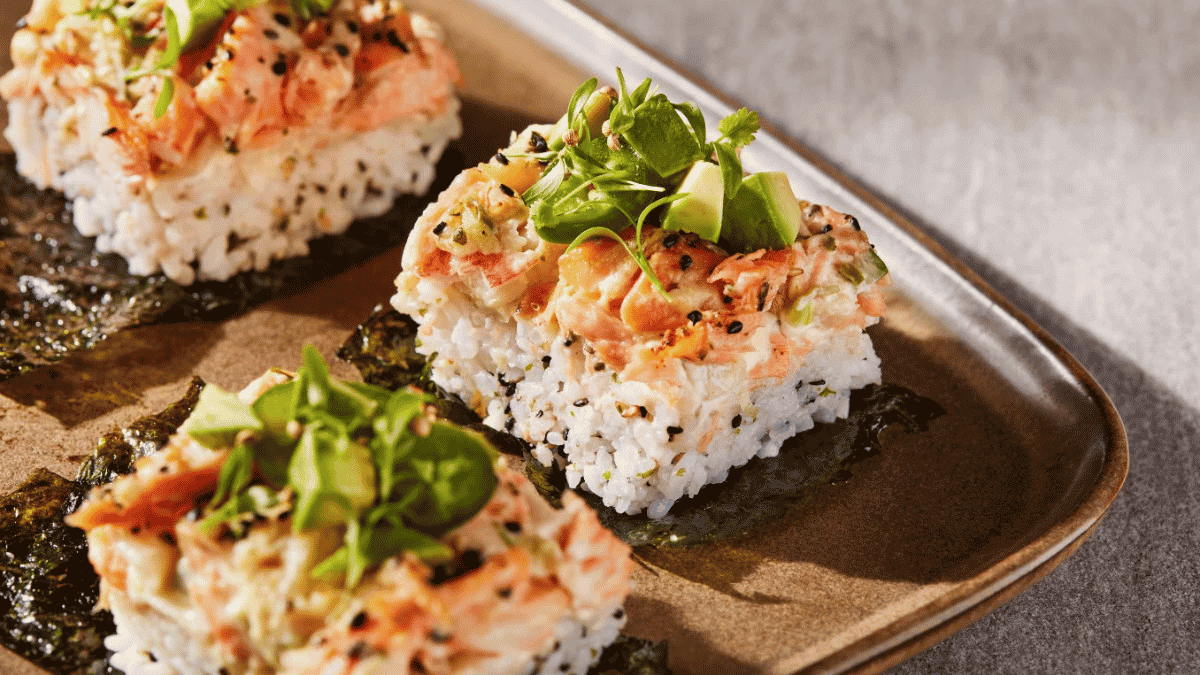
A salmon sushi bake is basically a baked seafood roll made in a casserole dish. Instead of rolling rice and fish into individual seaweed rolls, you press your cooked rice into the bottom of a pan, add a layer of Japanese seasoning, spread a creamy salmon and crab mix over the top, and put it in the oven.
To eat it, you scoop a spoonful out of the dish, drop it onto a small sheet of roasted seaweed, and eat it like a bite-sized wrap. If you want more general cooking ideas and base ingredients, check out our earlier guide on sushi bake ingredients and tips. This guide covers the exact salmon prep, rice ratios, and ways to make this dish lighter.
What Goes Into a Sushi Casserole?
A good sushi casserole salmon pan needs three clear parts:
- Short-grain rice: Dressed with a quick mix of rice vinegar, sugar, and salt so it tastes like real sushi rice.
- Furikake: A dry Japanese seasoning made from nori seaweed flakes, sesame seeds, and salt. It sits right between the rice and the fish so every scoop has flavor.
- Fish topping: Flaked cooked salmon mixed with mayonnaise, a splash of soy sauce, sesame oil, and sriracha for heat.
Ingredients
Rice Base
- 2 cups short-grain sushi rice (Calrose works great)
- 2 cups water
- 3 tablespoons unseasoned rice vinegar
- 1 tablespoon sugar
- 1 teaspoon salt
Seafood Mix
- 1 pound fresh salmon fillet (skin off)
- 6 ounces imitation crab, pulled into thin strips
- 4 ounces cream cheese, at room temperature (optional)
- ⅓ cup Kewpie mayonnaise (Japanese mayo)
- 1 to 2 tablespoons sriracha
- 1 tablespoon low-sodium soy sauce
- 1 teaspoon sesame oil
For Serving
- 3 tablespoons furikake seasoning
- 2 packs small roasted seaweed snack sheets (nori)
- 2 green onions, sliced thin
- 1 avocado, cut into cubes
- 1 small cucumber, sliced thin
Step 1: Cook the Rice in a Rice Cooker
Do not use long-grain rice like jasmine or basmati. It stays dry and will not hold together when you try to scoop it out of the pan. Stick with short-grain sushi rice.
Rinse the Grains
Put the dry rice in a bowl or fine strainer. Run cold water over it, swirl it around with your fingers for a few seconds, and drain the cloudy water. Do this 3 or 4 times until the water stays mostly clear. Rinsing gets rid of loose starch that would otherwise make the rice mushy.
Water Ratio and Cooking
Knowing how to cook sushi rice in rice cooker pots comes down to water measurement. Keep it at a flat 1:1 ratio. For 2 cups of rinsed rice, pour in 2 cups of clean water.
Start the normal white rice cycle. When making sushi rice in rice cooker machines, let the pot sit closed for 10 minutes after the cooking timer goes off. The trapped steam finishes cooking the center of the rice grains.
Seasoning the Rice
Mix the vinegar, sugar, and salt in a cup until dissolved. Put your hot rice into a wide bowl, pour the vinegar mix over it, and fold it in with a wooden spoon or spatula. Do not stir hard or you will mash the grains. Let the seasoned rice cooker sushi rice sit on the counter until it drops down to warm room temperature.
Step 2: Cook the Salmon
You do not need raw, sushi-grade fish for this because the oven cooks it through anyway. Cheap, fresh salmon fillets from any supermarket work fine.
Here is how to cook salmon for sushi bakes without drying it out:
- Heat your oven to 400°F (200°C).
- Put the salmon fillet on a baking sheet lined with foil. Rub a few drops of oil and a pinch of salt over the top.
- Bake for 12 to 14 minutes. The fish should flake easily with a fork and look light pink throughout.
- Let it cool for 5 minutes, then use two forks to pull the fillet apart into bite-sized flakes. Leave some small chunks so the casserole has body.
(If you already have leftover grilled or baked salmon in the fridge, skip this step and just flake it into your mixing bowl.)
Step 3: Mix the Seafood Topping
Put the flaked salmon and shredded crab into a large bowl.
Using shredded crab gives you a classic sushi bake recipe imitation crab texture. It adds a slight sweetness that balances the rich salmon, very similar to the inside of a standard crab roll sushi.
Add the room-temperature cream cheese, Kewpie mayo, sriracha, soy sauce, and sesame oil. Mix until smooth. The texture should look thick and creamy, like the filling used in a spicy kani roll or a baked salmon sushi roll.
How to Make It Without Cream Cheese
A lot of people do not want dairy in their seafood, or they want a cleaner taste. Making a salmon sushi bake without cream cheese is very simple:
- Leave the cream cheese out completely.
- Bump the Kewpie mayo up from ⅓ cup to ½ cup.
- Add 1 teaspoon of rice vinegar or lemon juice to balance the extra oil.
A sushi bake without cream cheese stays soft in the oven, browns nicely under the broiler, and feels much lighter to eat.
Step 4: Assemble and Bake
- Heat your oven to 425°F (220°C). Rub a little oil inside a 9×13-inch baking dish.
- Put the warm rice into the dish. Wet your spatula with a little water so the grains do not stick, and press the rice into an even layer on the bottom. Firm it up, but do not crush it.
- Shake 2 to 3 tablespoons of furikake over the rice so the surface is well covered.
- Spoon the salmon and crab mix on top of the furikake and spread it all the way to the corners.
- Bake uncovered on the middle rack for 12 to 15 minutes, until the edges bubble.
- Turn on the broiler on high for 2 minutes. Stay by the oven and watch it. You want light brown, toasted spots on the top, just like a torched baked salmon roll from a restaurant. Take it out before the edges scorch.
- Scatter your sliced green onions on top, along with a few extra pinches of furikake.
How to Serve It
Put the hot dish in the center of the table with your avocado, cucumber, and seaweed packets.
Grab a small sheet of roasted seaweed, scoop a spoonful of the hot rice and fish right onto the center, drop a piece of avocado or cucumber on top, and eat it straight away while the nori is still dry and crunchy.
If you enjoy straightforward seafood meals, you can also look through our fish and chips guide
Flavor Adjustments
- More Crab: If you want a sweeter pan, use 10 to 12 ounces of crab and cut the salmon down to 6 ounces. It ends up tasting like a warm spicy crab roll.
- Crunchy Salad Topping: Instead of mixing all the crab into the hot dish, save a handful of shredded crab, mix it with cucumber matchsticks, and spoon it cold over the hot casserole when it comes out of the oven. This gives you the crunch and temperature difference of a Japanese kani salad.
Storing and Reheating
- Fridge Storage: Let the dish cool down to room temperature. Cover the pan tightly with foil or move leftovers into a glass container with a lid. It keeps well in the fridge for up to 3 days. Do not leave it sitting out on the counter for more than 2 hours.
- Oven Reheat (Recommended): Put leftovers in an oven-safe dish, cover loosely with foil, and warm at 350°F (175°C) for 8 to 10 minutes. The oven softens the cold rice without drying the fish out.
- Microwave Reheat: Put a portion on a plate and cover it with a damp paper towel. Microwave at medium power in 45-second bursts. The damp towel steams the cold rice so it gets soft again.
- Seaweed Packets: Keep your seaweed packets sealed in the pantry. If you put seaweed sheets in the fridge, the moisture in the air will turn them soggy.
Frequently Asked Questions
Can I use canned salmon instead of fresh fillets?
Yes. Pick canned wild pink or red salmon in water. Drain the liquid well, remove any large soft bones, and flake it into your bowl. It saves time and tastes very close to freshly baked fish once mixed with the mayo and sriracha.
Can I assemble this ahead of time?
Yes. You can press the cooked rice into the pan, add the furikake, mix the seafood in a separate bowl, and keep both covered in the fridge for up to 24 hours. When you are ready to eat, spread the fish mix over the rice and bake at 400°F for 18 to 20 minutes since the pan starts cold.
Why does my rice fall apart when scooped?
This happens if you use long-grain rice (like basmati or jasmine) instead of short-grain sushi rice, or if you did not press the rice firmly enough into the pan. Short-grain rice contains the right starch profile to stick together when warm.
What can I use if I cannot find Kewpie mayonnaise?
Kewpie uses only egg yolks, which makes it richer and thicker than standard store mayo. If you only have regular American mayo, mix ½ cup of it with ½ teaspoon of rice vinegar and a small pinch of sugar to get a similar flavor.